Street Theater: Performance as a Form of Social Intervention and Community Expression
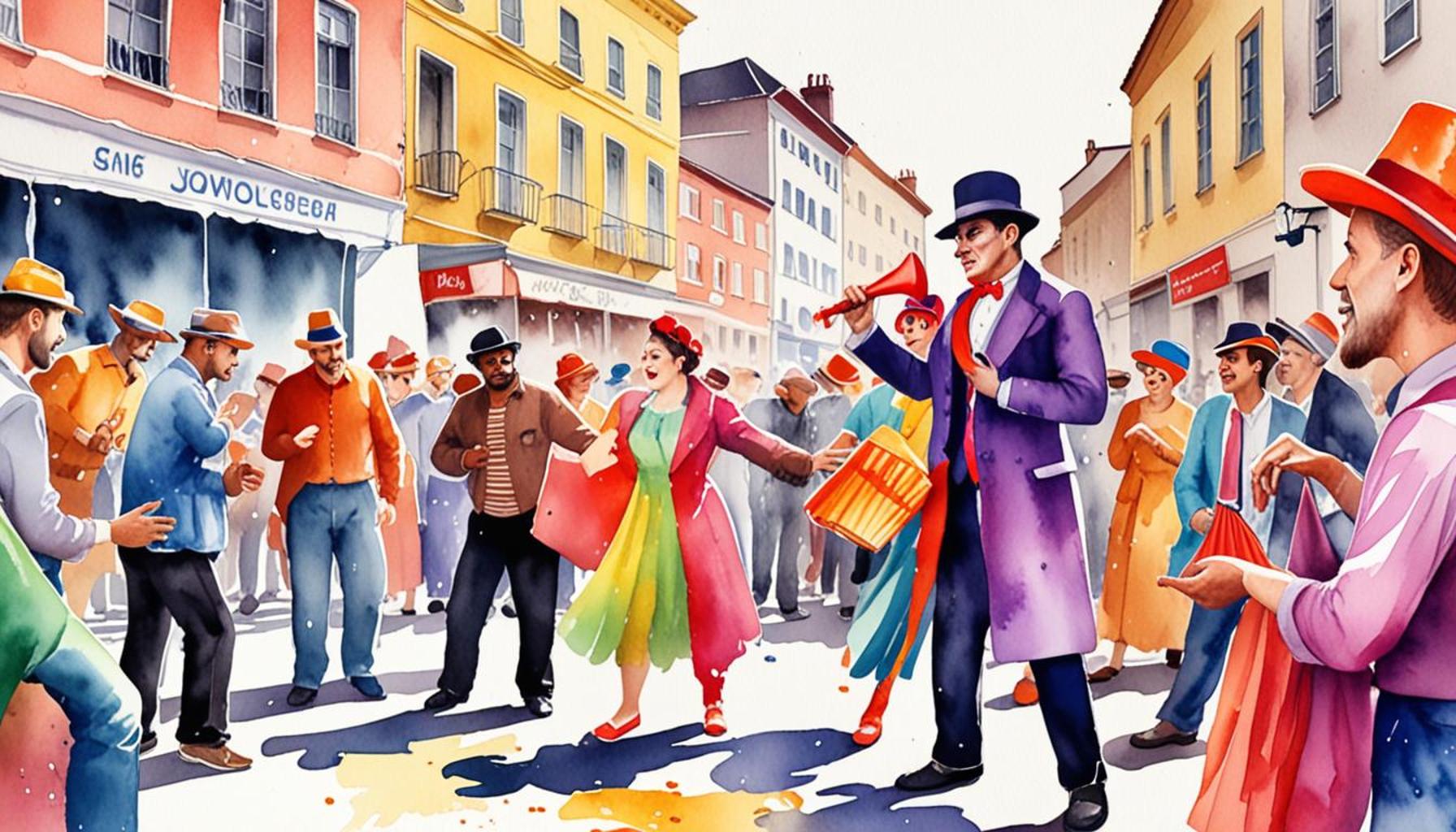
The Vibrancy of Urban Expression
In the heart of urban America, a transformative movement is taking place that merges creativity with activism. This phenomenon resonates deeply within the context of social change, as street theater emerges as a potent form of expression that transcends mere entertainment. Unlike traditional theater, which often requires ticket sales and theater houses, street theater breaks geographical and financial barriers, making art accessible to all. This form of performance thrives in community parks, sidewalks, and public squares, infusing life into the urban landscape while stirring poignant conversations about societal issues.
Engaging Through Storytelling
One of the most compelling aspects of street theater lies in its ability to present local stories, reflecting the experiences and cultural identities of the communities it inhabits. For instance, performances in neighborhoods like Harlem in New York City often spotlight African American history and contemporary struggles, weaving together narratives that highlight resilience and pride. By utilizing relatable characters and scenarios, street theater allows audiences to confront their own realities, connecting shared experiences to broader social themes.
Advocacy on the Streets
Street theater acts as a megaphone for advocacy, bravely tackling urgent social issues such as inequality, racism, and climate change. During the climate marches in cities like Seattle, artists have used theatrical performances to illustrate the impacts of environmental degradation, encouraging attendees to rethink their relationship with nature. These performances often combine satire and drama, effectively drawing attention to the urgency of these issues while entertaining the audience. The accessibility of street theater turns passive spectators into active participants, fostering a sense of urgency that drives collective action.
Fostering Participation and Reflection
Participatory elements are a hallmark of street theater, as these performances encourage members of the audience to engage directly with the artists. This interaction can take many forms – from improvisation that lets local voices shape the narrative, to workshops that invite community members to share their own stories. In cities like Chicago, where anti-gun violence campaigns have gained traction, street theater has provided a space for healing and dialogue, allowing grieving families to share their experiences and advocates to discuss solutions in a collaborative atmosphere.
The impact of street theater extends far beyond entertainment. It empowers communities by amplifying underrepresented voices, prompting discussions that might otherwise remain silenced. Throughout history, movements like the civil rights protests in the 1960s have utilized this medium to create memorable images that endure in the public consciousness. Today, as the United States grapples with deeply rooted challenges, the role of street theater continues to evolve, inviting us to engage in the discourse surrounding justice, equality, and solidarity.

A Catalyst for Change
As we explore the remarkable influence of street theater in shaping community connections and promoting social change, we are reminded of its enduring power. Whether in a spontaneous performance at a city park or a structured event at a community center, street theater serves as a vital outlet for expression and an instrument of awareness. In this way, it not only allows communities to voice their concerns but also cultivates a rich tapestry of dialogue that paves the way for understanding and progress across various social terrains.
DISCOVER MORE: Click here to delve deeper
Unearthing Community Narratives
At its core, street theater exists as a platform that reveals the rich tapestry of community narratives, offering a stage for voices often drowned out by mainstream media. Performances emerge from the very heart of neighborhoods, resonating with the unique cultural, social, and political landscapes that shape everyday life. By spotlighting stories from local communities, street theater provides an authentic lens through which audiences can gain insight into the multifaceted nature of their society.
Building a Sense of Belonging
The beauty of street performances lies not only in entertainment but also in their ability to foster a deep sense of belonging among participants. Street theater invites individuals to become part of something larger than themselves—creating a shared experience that transcends individual differences. This communal aspect plays a significant role in addressing various social issues, as artists and audience members engage in an open dialogue, exploring topics such as:
- Racial injustice and systemic inequality
- Economic disparities that plague urban areas
- Immigration stories that reflect the challenges faced by newcomers
- Environmental concerns that challenge community resilience
Through storytelling, street theater ignites empathy and understanding, allowing participants to see the world through the eyes of others. For instance, cities like Portland have seen dynamic performances addressing the complexities of the immigrant experience, illustrating both the struggles of adaptation and the celebration of cultural diversity. These narratives resonate deeply, encouraging reflection and fostering a sense of unity.
Catalyzing Community Engagement
Additionally, street theater plays a pivotal role in catalyzing community engagement. By bringing performances directly to public spaces, artists create an environment that invites dialogue and interaction. Community members are often encouraged to share their perspectives and partake in discussions that extend beyond the stage. This participatory model not only strengthens community bonds but also promotes critical thinking about pressing issues.
The power of street theater lies in its ability to transform passive onlookers into active participants. In many cases, this transformation amplifies the reach of the message, sparking conversations that might otherwise remain unspoken. In Los Angeles, for instance, performances addressing homelessness have spurred community-led initiatives aimed at providing resources and support for the most vulnerable populations. Here, art becomes a call to action, motivating individuals to play a role in the solutions that directly affect their lives.
Reclaiming Public Spaces
Moreover, street theater has the unique ability to reclaim public spaces, turning ordinary locations into vibrant venues for cultural exchange and social commentary. By utilizing parks, plazas, and streets, artists infuse these spaces with purpose and narrative, challenging conventional uses of urban environments. This invasion of performance often encourages towns and cities to rethink the function of public areas, opening dialogue about access, safety, and community-driven change.
In summary, street theater is not merely a transient display of creativity; rather, it serves as a formidable force for social intervention and community expression. By weaving together local stories, engaging citizens in discourse, and reclaiming public spaces, street theater solidifies its role as a beacon of hope and a catalyst for change in the ever-evolving urban landscape.
| Advantages | Impact on Society |
|---|---|
| Community Engagement | Street theater actively involves local populations, enabling them to engage with the content and the issues it raises. |
| Awareness Raising | These performances address pressing social issues, raising awareness and stimulating conversation in public spaces. |
Street theater serves as a *dynamic platform* for cultural expression and social intervention, creating a common ground for community members to reflect on societal issues. By fostering community engagement, these performances provide participants with a voice, transforming passive audiences into active respondents. Street theater not only entertains but also educates, allowing critical themes like inequality, justice, and identity to surface in a relatable manner. Additionally, this form of performance art acts as a catalyst for social change by raising awareness about numerous societal challenges, thus encouraging dialogue and potential activism. By performing in *public spaces*, artists create accessible discussions, ensuring that vital topics reach a broader audience. This unique approach allows for a fusion of entertainment and education, making street theater a powerful tool in promoting community solidarity and understanding.
DISCOVER MORE: Click here to learn about the power of collaboration in writing
Amplifying Local Voices through Collaboration
Street theater thrives on its collaborative nature, drawing in not just artists but also community members, social activists, and local organizations. This collaborative spirit elevates performances from mere entertainments to poignant expressions of cultural identity and urgent social commentary. By partnering with local nonprofits, community centers, and schools, street theater groups can amplify their impact, merging art with advocacy to forge stronger ties within the community.
Creative Workshops and Skill-Building
Many street theater troupes incorporate workshops designed to engage community members from diverse backgrounds actively. These workshops serve as platforms for skill-building—enabling participants to express their stories through physical movement, dialogue, or improvisation. For instance, in neighborhoods heavily populated by immigrant communities, workshops can provide a space for sharing personal narratives and creating performances that speak to shared experiences of migration, resilience, and cultural preservation.
Such inclusive initiatives foster empowerment and self-discovery. They give local residents an opportunity to reclaim their narratives, instilling a sense of pride in their cultural heritage while prompting deeper discussions around relevant social concerns. This, in turn, creates a pipeline of narrative-driven street performances that resonate powerfully with audiences who see reflections of their own realities.
Engaging Diverse Audiences
Street theater also demonstrates a unique capacity for engagement with diverse audiences in a way that traditional theater may not. Performances are often unannounced instead of being confined within theater walls, encountering passersby spontaneously. This unpredictability can captivate individuals who may not typically seek out art, thereby expanding the demographic reach.
For example, events like the San Francisco Mime Troupe frequently utilize their performances to comment on pressing issues such as climate change and economic injustice, engaging participants of all ages and backgrounds. The informal nature of these street performances allows for immediate and unfiltered reactions, leading to richer conversations and emotional reactions that might prove more challenging within the formal confines of a theater.
Facilitating Civic Dialogue
Moreover, street theater opens avenues for civic dialogue, serving as a powerful means for initiating community conversations around local governance and policies affecting disadvantaged populations. As street performers reenact scenes reflecting local injustices—say, a portrayal of residents battling eviction or injustices faced in schools—they spark community-wide awareness and discussion.
In cities like New York and Chicago, street theater has played a critical role in organizations advocating for policy changes. By performing narratives that highlight systemic inequalities, artists can mobilize citizens to advocate for change, thus laying the groundwork for a more informed and engaged community. This cyclical nature of street theater not only enhances audience awareness but instigates direct action, enabling communities to rally around their shared experiences and concerns.
As artists and community members continue to collaborate in crafting reflections of their own realities, street theater emerges as a vital medium for social intervention and collective expression, ensuring that the diverse tapestry of urban life is honored and celebrated.
DISCOVER MORE: Click here to dive into creative projects with recycled materials
Conclusion: The Transformative Power of Street Theater
The role of street theater as a vehicle for social intervention and community expression cannot be overstated. By fostering collaboration among artists, community members, and local organizations, this dynamic art form effectively transforms the streets into vibrant stages for storytelling. Through creative workshops and inclusive participation, street theater validates diverse voices, allowing individuals to share their narratives while instilling a sense of cultural pride and community identity.
Furthermore, the accessibility of street performances breaks down barriers, drawing in audiences that traditional theater often misses. This spontaneity sparks conversations that resonate deeply with the public, provoking thought and engagement on critical social issues. Whether it’s the fight against inequality, environmental concerns, or the struggles of marginalized communities, street theater serves as a mirror reflecting the lived realities of those it aims to represent.
As a platform for civic dialogue, street theater empowers citizens by encouraging them to confront injustices within their communities and sparking actionable change. It catalyzes discussions that can lead to grassroots movements and policy reforms, strengthening community bonds and promoting activist spirit. In this way, street theater is not just entertaining; it is a powerful tool for social transformation, fostering empathy, awareness, and connection among diverse groups.
In a world that often marginalizes underrepresented voices, street theater stands as a vital reminder of the importance of community expression. It invites us to engage with our surroundings, to listen, and to act. As we move forward, embracing the rich tapestry of stories illuminated by street theater will ensure that our communities remain vibrant and resilient.