The Importance of Daily Meditation for Mental Well-Being

Why Millions of Americans Are Turning to Meditation Every Day
Across the United States, from bustling New York offices to quiet Midwest homes, a quiet revolution is unfolding. Daily meditation for mental well-being has moved from niche wellness circles into mainstream routines, showing up in corporate wellness programs, school curriculums, and even military training.
According to recent surveys, more than 14% of U.S. adults have tried meditation at least once, with numbers climbing every year. Apps like Headspace and Calm now boast tens of millions of downloads, and yoga studios from Los Angeles to Austin are adding dedicated meditation rooms. But what’s driving this shift?
The Modern Stress Epidemic
Americans report record levels of anxiety, burnout, and sleepless nights. Work pressure, digital overload, and constant news cycles have created a mental health crisis that traditional solutions haven’t fully addressed. The American Psychological Association has repeatedly flagged stress as a national health concern, with younger generations reporting the highest levels of chronic worry.
This is where meditation for stress relief enters the conversation—not as a trend, but as a scientifically backed practice increasingly recommended by therapists, physicians, and even corporate HR departments looking to reduce employee burnout.
What Science Reveals About Meditation
Researchers have spent decades studying how meditation improves mental health, and the findings are compelling. Regular practice has been linked to:
- Reduced cortisol levels and lower stress responses
- Improved emotional regulation and resilience
- Better sleep quality and reduced insomnia symptoms
- Enhanced focus, memory, and cognitive clarity
These aren’t vague promises—they’re measurable outcomes documented in clinical studies from institutions like Harvard and Johns Hopkins. Brain imaging studies have even shown that consistent meditators develop increased gray matter density in regions associated with memory and emotional processing, suggesting the practice may physically reshape the brain over time.
Beyond the Hype: What This Article Covers
This piece explores the real benefits of daily meditation, breaking down practical daily meditation techniques anyone can start today, whether it’s a five-minute breathing exercise before work or a guided session during a lunch break. We’ll also examine the deeper connection between mindfulness and mental well-being, looking at how small, consistent habits can create lasting shifts in mood, productivity, and overall life satisfaction.
Whether you’re a skeptic or a curious beginner, the evidence might surprise you—and it may just be the reason so many Americans are choosing to sit still for a few minutes each day.
LEARN MORE: How art and creativity can be tools to improve mental well-being
# From Silicon Valley Boardrooms to Suburban Kitchens: Meditation Finds Its Footing
Walk into any Fortune 500 office in Seattle or a small startup in Denver, and you might notice something unexpected: employees stepping away from their desks not for coffee, but for a quiet ten-minute pause. This shift reflects a growing recognition that Daily Meditation for Mental Well-Being isn’t just a personal wellness choice—it’s becoming a workplace strategy.
Companies like Google, Apple, and Target have implemented meditation rooms and mindfulness programs, citing measurable improvements in employee focus and reduced sick days. This corporate embrace signals something larger: meditation has graduated from countercultural practice to evidence-based intervention.
What makes this transition particularly noteworthy is the speed at which it happened. Just two decades ago, meditation was largely associated with yoga studios and spiritual retreats tucked away in places like Sedona or Big Sur. Today, it’s woven into corporate wellness stipends, health insurance incentives, and even public school curricula in states like California and Massachusetts. The cultural pendulum has swung from skepticism to near-mainstream acceptance, and the numbers back it up—according to a National Health Interview Survey, the percentage of American adults practicing meditation more than tripled between 2012 and 2022.
The Anatomy of a Meditation Habit
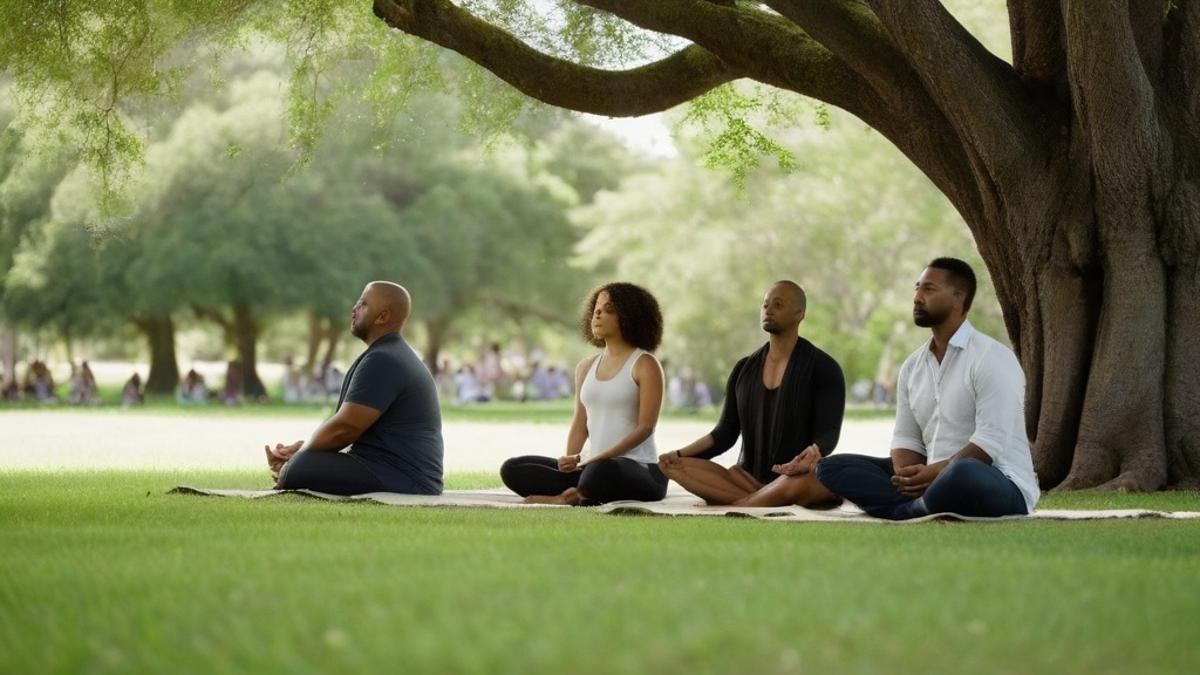
What does it actually mean to meditate daily? Contrary to popular belief, it doesn’t require sitting cross-legged for an hour in silence. Modern daily meditation techniques have evolved to fit into even the busiest American schedules.
Common approaches include:
- Breath-focused meditation — Simple inhale-exhale counting, often done in five-minute increments
- Body scan meditation — A systematic mental check-in from head to toe, popular before bedtime
- Guided visualization — Using apps or audio to imagine calming scenarios, frequently used during commutes
- Walking meditation — Mindful movement, often practiced during lunch breaks in city parks
- Loving-kindness meditation — Focused on cultivating compassion, gaining traction in therapy settings
Each technique targets slightly different outcomes, but all share a common thread: training the mind to stay present rather than spiraling into past regrets or future anxieties.
Interestingly, the rise of smartphone apps like Calm and Headspace has played a significant role in democratizing these practices. What once required a teacher, a studio membership, or a retreat fee can now be accessed for the price of a monthly subscription—or even for free through YouTube channels and public library resources. This accessibility has opened the door for demographics that previously felt excluded from meditation culture, including busy parents, night-shift workers, and college students juggling multiple part-time jobs.
Why Consistency Matters More Than Duration
Here’s something that surprises many newcomers: research suggests that how meditation improves mental health depends less on session length and more on frequency. A 2021 study published in the journal Health Psychology found that participants who meditated for just ten minutes daily showed greater reductions in anxiety than those who meditated for thirty minutes once a week.
This finding reshapes how Americans should approach the practice. Rather than blocking out an hour on Sunday mornings, experts increasingly recommend brief, consistent sessions—perhaps five minutes after waking up, or a quick reset during a stressful afternoon at work.
This accessibility is likely why meditation for stress relief has gained such traction among people who once dismissed it as impractical. The barrier to entry has essentially disappeared, replaced by an approach that fits into a lunch break, a school pickup line, or even a red light at a busy intersection.
Some researchers compare this to building any other habit, like brushing your teeth or drinking water throughout the day. The brain, much like a muscle, appears to respond more favorably to steady, incremental training rather than sporadic bursts of intense effort. This mirrors findings in fitness science, where consistency often outperforms occasional high-intensity sessions for long-term results.
As more workplaces, schools, and even hospitals in cities from Austin to Chicago begin integrating these short mindfulness breaks into daily routines, the conversation around meditation continues to shift from “does it work?” to “how quickly can it become part of everyday American life?” For a nation often defined by its relentless pace, that question alone might be worth sitting with for a few quiet minutes.
YOU MAY ALSO LIKE: How mindful eating can affect your mental well-being
# The Science Behind the Calm: What’s Actually Happening in Your Brain
Skeptics often ask a fair question: is this just a placebo effect dressed up in wellness branding? The neuroscience suggests otherwise. Brain imaging studies from institutions like Harvard Medical School and UCLA have documented measurable structural changes in people who meditate regularly, offering some of the strongest evidence yet for Daily Meditation for Mental Well-Being as a legitimate health practice rather than a passing trend.
A widely cited 2011 Harvard study found that participants who completed an eight-week mindfulness program showed increased gray matter density in the hippocampus, the region associated with memory and emotional regulation. Simultaneously, the amygdala—the brain’s alarm system responsible for fight-or-flight responses—showed decreased density. In plain terms: consistent practice appears to physically rewire the brain toward calmer, more measured responses to stress.
This helps explain how meditation improves mental health on a biological level, not just an emotional one. It’s not simply about feeling more relaxed in the moment; it’s about training the nervous system over time to react differently to triggers that once caused spikes in cortisol, the body’s primary stress hormone.
Measurable Benefits Beyond the Mind
The benefits of daily meditation extend well past emotional regulation, touching physical health markers that many Americans track closely. Consider the following documented outcomes from clinical research:
- Lower blood pressure — A study in the American Journal of Hypertension linked regular meditation to measurable reductions in systolic pressure
- Improved sleep quality — Practitioners reported falling asleep faster and experiencing fewer nighttime awakenings, according to research from the University of Massachusetts
- Reduced inflammation markers — Studies have connected mindfulness practice to lower levels of C-reactive protein, a marker linked to chronic disease
- Enhanced immune response — Some research suggests meditators produce more antibodies after flu vaccinations compared to non-meditators
These findings matter in a country where stress-related illness costs the economy an estimated $300 billion annually in healthcare expenses and lost productivity, according to the American Institute of Stress.
A Tool Gaining Ground in Clinical Settings
Perhaps the most telling sign of meditation’s legitimacy is its adoption within traditional medicine. Veterans Affairs hospitals across the country now offer mindfulness-based stress reduction programs to treat PTSD symptoms. Oncology centers in cities like Boston and Houston incorporate meditation into cancer treatment plans, not as a cure, but as a companion therapy for managing treatment-related anxiety.
Therapists increasingly recommend meditation for stress relief alongside, not instead of, conventional treatments like cognitive behavioral therapy or medication. This integrative approach reflects a broader shift in how mindfulness and mental well-being are understood within clinical psychology—less as alternative medicine, and more as a complementary tool with its own measurable evidence base.
Insurance providers have taken notice too. Some major carriers now offer discounts or wellness credits for members who complete mindfulness programs, treating meditation with the same seriousness once reserved for gym memberships or smoking cessation courses.
CHECK OUT: The role of physical activity in improving mental health and reducing stress
The Bottom Line: A Small Habit With Outsized Returns
The evidence assembled here points to a clear conclusion: Daily Meditation for Mental Well-Being is not wellness marketing dressed up in scientific language. It’s a practice backed by brain imaging, clinical trials, and adoption by institutions ranging from VA hospitals to major insurance carriers.
What makes this particularly relevant for Americans today is the accessibility factor. Unlike expensive therapy sessions or prescription regimens, daily meditation techniques require no insurance card, no waiting list, and often no cost beyond a few quiet minutes.
Apps like Headspace and Calm have made entry points easier than ever, but the research suggests even unguided practice—five or ten minutes of focused breathing—can begin producing measurable changes within eight weeks.
That said, meditation isn’t a silver bullet. Researchers and clinicians alike are careful to frame it as a complementary practice, not a replacement for medication or professional treatment when clinical depression or severe anxiety is involved.
Understanding how meditation improves mental health means recognizing it as one tool among many, most effective when paired with sleep, movement, and social connection.
Still, the trajectory is hard to ignore. As healthcare costs climb and stress-related illness continues draining both personal health and national productivity, meditation for stress relief offers a rare combination: low cost, minimal risk, and a growing body of data supporting real physiological benefit.
For readers curious enough to test the claims themselves, the next step is simple. Start small, stay consistent, and let the evidence—both clinical and personal—speak for itself.
The broader conversation around mindfulness and mental well-being is far from finished, and future studies will likely refine what we know. But for now, the science offers a compelling invitation to sit still, breathe, and pay attention.
Frequently Asked Questions
How long should I meditate each day to notice improvements in mental well-being?
Most research suggests that just 10 to 15 minutes of daily meditation can lead to measurable reductions in stress and anxiety within a few weeks. Consistency matters more than duration, so a short daily session is more effective than occasional long ones. As you build the habit, you can gradually extend sessions to 20-30 minutes for deeper benefits.
What is the best time of day to practice daily meditation for mental well-being?
Many people find morning meditation helpful because it sets a calm tone before the day’s stressors begin. However, some prefer evening sessions to unwind and process the day’s events before sleep. The best time is whichever slot you can consistently commit to, since regularity is key to long-term mental health benefits.
Can daily meditation actually reduce symptoms of anxiety and depression?
Yes, numerous clinical studies show that regular meditation, particularly mindfulness-based practices, can lower cortisol levels and reduce symptoms of anxiety and mild to moderate depression. It works by helping the brain regulate emotional responses and reducing rumination. That said, meditation should complement, not replace, professional treatment for diagnosed mental health conditions.
Do I need any special equipment or app to start a daily meditation practice?
No special equipment is required; a quiet space and a comfortable seated position are enough to begin. Many beginners find guided meditation apps like Calm, Headspace, or Insight Timer helpful for structure and consistency. Over time, you can transition to unguided practice as you become more comfortable with the technique.
What type of meditation is most effective for improving mental well-being?
Mindfulness meditation is one of the most studied and effective forms for improving mental well-being, as it trains attention and emotional regulation. Other effective styles include loving-kindness meditation for reducing negative self-talk and body scan meditation for stress relief. The most effective type is ultimately the one you can practice consistently and enjoy.
How soon can I expect to feel the mental health benefits of daily meditation?
Some people report feeling calmer and less reactive after just a single week of daily practice. More significant changes in brain structure related to stress and emotional regulation, as shown in studies, typically appear after about eight weeks of consistent meditation. Long-term daily meditation for mental well-being continues to build resilience and emotional stability over months and years.

Linda Carter
Linda Carter is a writer specializing in healthy habits and balanced living. With extensive experience helping readers build sustainable routines, she shares practical guidance on nutrition, physical activity, quality sleep, stress management, and emotional well-being. Her goal is to offer simple, accessible strategies that inspire people to care for their health and enjoy a more balanced life.