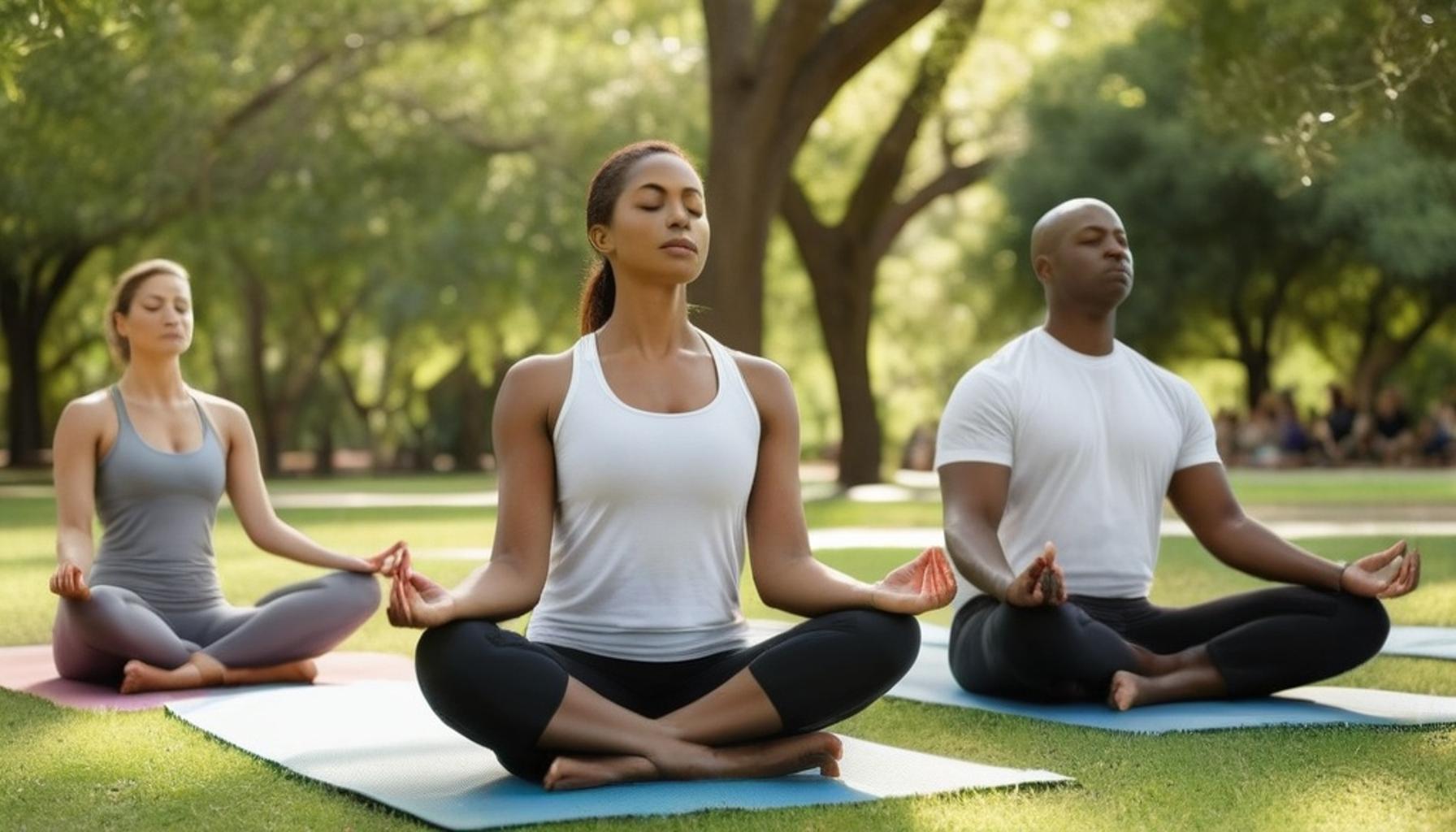
The relationship between physical activity and stress reduction: habits that transform

Why Movement Is Emerging as America’s Favorite Stress Antidote
Millions of Americans are discovering that the gym, the running trail, or even a living room yoga mat can double as therapy. The connection between physical activity and stress reduction is no longer just anecdotal — it’s backed by decades of research from institutions like Harvard Medical School and the American Psychological Association. From bustling city dwellers in New York squeezing in lunchtime jogs to suburban families in Ohio taking weekend hikes, the pattern is unmistakable: people are moving more, and they’re reporting feeling better because of it.
Chronic stress affects nearly 77% of adults in the United States, according to recent surveys, contributing to everything from sleep disorders to heart disease. This isn’t a minor statistic — it translates into billions of dollars in healthcare costs and countless hours of lost productivity every year. Yet the solution might be simpler and more accessible than most people assume. Unlike expensive therapy sessions or prescription medications, a brisk walk around the block costs nothing and requires no appointment.
What This Article Will Explore
This piece dives into the science behind how exercise helps mental health, breaking down the biological and psychological mechanisms at play. It also highlights practical, everyday habits anyone can adopt, regardless of fitness level, income, or geographic location. Whether you live in a downtown apartment in Chicago or a rural farmhouse in Iowa, the strategies discussed here are designed to be universally applicable.
- The role of endorphins and cortisol regulation in stress relief through physical activity, including how these chemical shifts happen within minutes of starting a workout
- Specific exercise routines for stress management, from high-intensity workouts like CrossFit and spin classes to gentle stretching practices such as tai chi and restorative yoga
- Real-world habits for reducing stress that fit into busy American lifestyles, including desk-break stretches and weekend outdoor adventures
- The surprising benefits of exercise for stress beyond the obvious mood boost, such as improved digestion, sharper focus at work, and stronger immune response
Whether you’re a marathon runner or someone who barely has time for a 15-minute walk, there’s compelling evidence suggesting that movement — in almost any form — can reshape how your body responds to daily pressures. Researchers have even found that as little as 20 minutes of moderate activity can trigger measurable changes in mood and cognitive clarity. The details might just change how you think about your next workout, and perhaps inspire you to lace up your sneakers sooner than you planned.
LEARN MORE: The role of sleep in stress management and the promotion of well-being
Something shifts the moment your sneakers hit the pavement and your heart rate climbs. It’s not just about torching calories on a Tuesday morning jog through Central Park or a sunset walk along the Santa Monica pier. Your body is quietly reprogramming its entire stress-response machinery, one heartbeat at a time. This is where the real story of physical activity and stress reduction begins, deep within your nervous system and bloodstream, far from anything you can see in a mirror.
Cortisol, often labeled the “stress hormone,” floods your system during moments of anxiety, looming deadlines, or that dreaded traffic jam on the 405 in Los Angeles. Left unchecked, chronically elevated cortisol levels contribute to weight gain, high blood pressure, and even memory problems down the road. Researchers at Harvard Medical School have documented that moderate physical exertion helps regulate cortisol production, essentially teaching your body to bounce back faster from stressful triggers instead of staying stuck in fight-or-flight mode for hours after the actual stressor has disappeared.
This regulation doesn’t happen overnight, but the changes are measurable within weeks. Blood samples taken from regular exercisers consistently show a blunted cortisol spike when faced with the same stressors that would send a sedentary person’s readings soaring. In other words, your body builds resilience the same way a muscle builds strength — through repeated, manageable exposure.
Endorphins: Your Body’s Natural Mood Elevator
At the same time cortisol drops, another chemical process kicks into gear. Endorphins — the neurotransmitters responsible for that post-workout glow — begin releasing within roughly 20 to 30 minutes of sustained activity. This is the biological foundation of stress relief through physical activity, and it explains why so many people describe feeling almost euphoric after a solid gym session or a long bike ride through a city park in Chicago or Austin.
But endorphins aren’t working alone. Several other mechanisms contribute to this transformation, often working in tandem to produce effects that outlast the workout itself:
- Increased production of serotonin and dopamine, chemicals linked to mood stability and motivation
- Reduced activity in the amygdala, the brain region responsible for processing fear and anxiety
- Improved blood flow to the prefrontal cortex, enhancing decision-making and emotional regulation
- Better sleep quality, which indirectly lowers baseline stress levels throughout the day
- Lower resting heart rate over time, reducing the physical sensation of anxiety before it even starts
This combination answers a question many skeptics ask: exactly how exercise helps mental health on a measurable, physiological level. It’s not just a placebo effect or wishful thinking — it’s neurochemistry in action, backed by brain scans and blood panels rather than anecdote alone.
Why Consistency Matters More Than Intensity
Interestingly, studies suggest that duration and consistency often matter more than intensity when it comes to stress management. A 2021 study published in the Journal of Clinical Psychiatry found that participants who engaged in just 150 minutes of moderate activity weekly — roughly 21 minutes a day — reported significantly lower anxiety scores compared to sedentary individuals.
That’s not an overwhelming commitment. It’s less time than most Americans spend scrolling through social media daily. Yet the payoff, according to researchers, rivals the effects of some low-dose anti-anxiety medications, without the side effects or the pharmacy bill. Whether it’s a brisk walk around the neighborhood, a quick swim, or a casual game of pickup basketball at the local park, the body seems less concerned with how hard you push and more focused on how often you show up.
YOU MAY ALSO LIKE: Outdoor Activities: How Nature Helps Relieve Stress
Building Habits for Reducing Stress That Actually Stick
Knowing the science is one thing. Turning it into a daily habit is where most people stumble. The gap between understanding benefits of exercise for stress and actually lacing up your shoes at 6 a.m. in Denver’s winter chill is exactly where most New Year’s resolutions quietly die by February.
Behavioral psychologists point to a concept called “habit stacking” as one of the most effective habits for reducing stress long-term. Instead of overhauling your entire schedule, you attach a new movement habit to something you already do without thinking. Coffee brewing? That’s ten minutes of stretching. Waiting for a work call? A quick walk around the block in Portland’s tree-lined streets counts.
The logic behind habit stacking isn’t just convenience — it’s neurological. Existing routines already have strong neural pathways carved out from repetition. By linking a new behavior to an established one, you essentially hitch a ride on wiring your brain has already built. This is why fitness trainers in cities like Austin and Chicago increasingly design “micro-habit” programs instead of traditional 45-minute gym blocks. The goal isn’t to impress anyone with intensity; it’s to make movement so frictionless that skipping it feels more inconvenient than doing it.
Sample Exercise Routines for Stress Management
Not every stressed-out professional in Boston or Miami has an hour to spare for the gym. Fortunately, research from the American Council on Exercise suggests that shorter, more frequent sessions can be just as effective as one long workout. Consider these approachable options:
- A 10-minute morning walk combined with a 10-minute evening walk, bookending the day with movement
- Three weekly sessions of resistance training, shown to lower perceived stress scores by nearly 20 percent in a University of Georgia study
- Yoga or tai chi twice a week, which pairs physical movement with controlled breathing for a dual calming effect
- Desk-based stretching every 90 minutes during work hours to interrupt cortisol buildup before it accumulates
- Weekend hikes, even modest ones through local trails, which combine exercise with exposure to nature — a factor linked to further reductions in anxiety
What ties these examples together isn’t intensity. It’s regularity. The nervous system responds to patterns, not heroic one-off efforts. A single grueling spin class won’t undo months of chronic stress, but a modest, repeatable routine will gradually recalibrate how your body reacts to pressure.
Interestingly, timing may matter almost as much as consistency. Some sleep researchers suggest that morning movement sets a physiological tone for the rest of the day, lowering baseline cortisol before workplace emails and traffic jams even have a chance to spike it. Others argue that evening exercise serves as a decompression valve, helping the body transition out of “alert mode” before bedtime. The truth may simply be that the best time to exercise is whichever time you’ll actually repeat tomorrow.
The Social Dimension Nobody Talks About
There’s also an underexplored angle: group activity. Joining a recreational soccer league in Seattle or a Saturday morning running club in Philadelphia adds a social buffer against stress that solitary exercise doesn’t always provide.
A 2019 study from the University of Vermont found that people exercising in groups reported a 26 percent greater reduction in stress compared to those working out alone, even when the physical exertion was identical. Human connection, it turns out, amplifies the biochemical benefits already happening beneath the surface.
Some researchers point to oxytocin release during group activities as a possible explanation, while others suspect accountability plays a larger role than biology. When a friend is expecting you at the trailhead in Salt Lake City or the track in San Diego, skipping the session becomes a social decision, not just a personal one. That subtle pressure, paradoxically, seems to reduce stress rather than add to it.
This raises an intriguing question researchers are still chasing: how much of the stress relief comes from the movement itself, and how much comes from simply showing up somewhere, surrounded by other people chasing the same goal?
RECOMMENDED: The importance of conscious breathing in reducing daily stress
The Bigger Picture: What Science Still Can’t Fully Explain
After sifting through the research, one truth becomes clear: physical activity and stress reduction are linked by more than just biology. It’s not simply about sweating out cortisol or chasing an endorphin high. It’s about rhythm, repetition, and the quiet decision to show up, day after day, even when motivation is nowhere to be found.
The benefits of exercise for stress extend far beyond the workout itself. They ripple into sleep quality, focus at work, patience with family, and resilience during the inevitable curveballs life throws — whether that’s a canceled flight out of O’Hare or a tense budget meeting in downtown Atlanta.
What separates people who successfully manage stress from those who don’t often isn’t willpower. It’s design. The habits for reducing stress that stick are the ones built into daily friction points — the coffee maker, the commute, the lunch break — rather than relying on discipline alone.
Still, questions remain open. Researchers continue to debate how much of stress relief through physical activity comes from neurochemistry versus social connection, structure, or simply the psychological relief of doing something proactive. That ambiguity isn’t a weakness in the science; it’s an invitation to keep exploring.
For now, the practical takeaway is refreshingly simple. Anyone curious about how exercise helps mental health doesn’t need a perfect plan or an expensive gym membership. A short walk, a stretch between meetings, or a Saturday hike can quietly become part of a personal toolkit against chronic tension.
The most effective exercise routines for stress management won’t look identical from person to person. But the underlying principle stays consistent: movement, repeated often enough, has a way of reshaping not just the body, but the mind’s relationship with pressure itself.
Frequently Asked Questions
How does physical activity and stress reduction actually work in the body?
Exercise lowers levels of stress hormones like cortisol and adrenaline while boosting endorphins, serotonin, and dopamine, which improve mood and relaxation. It also reduces muscle tension and improves sleep quality, both of which help the nervous system recover from chronic stress. Over time, regular movement retrains the body’s stress response to be less reactive to daily pressures.
How much exercise per week is needed to notice stress relief?
Most research suggests 150 minutes of moderate aerobic activity per week, such as 30 minutes five days a week, produces measurable reductions in anxiety and stress. Even shorter sessions of 10 to 20 minutes can create an immediate calming effect after a stressful day. Consistency matters more than intensity, so building a sustainable weekly habit is key to lasting results.
What types of exercise are most effective for reducing stress compared to others?
Aerobic activities like walking, running, cycling, and swimming are especially effective because they regulate breathing and heart rate while releasing endorphins. Mind-body practices such as yoga and tai chi combine movement with breath control, which directly activates the parasympathetic nervous system. Strength training also helps by providing a physical outlet for tension, though it may take slightly longer to produce the same calming effect as aerobic work.
Can exercising too much actually increase stress instead of reducing it?
Yes, overtraining without adequate rest can elevate cortisol levels and lead to fatigue, irritability, and disrupted sleep, which mimics or worsens stress symptoms. This is common when people push high-intensity workouts daily without recovery days. Balancing activity with rest, hydration, and nutrition ensures physical activity continues to support stress reduction rather than undermine it.
What time of day is best to exercise for managing daily stress?
Morning workouts can help regulate cortisol early and set a calmer tone for the day, while evening exercise is effective for releasing accumulated tension from work or daily pressures. The best time ultimately depends on personal schedule and energy levels, since consistency is more important than a specific hour. Some people benefit from a short midday walk to break up stressful stretches and reset focus.
How can someone build a lasting physical activity habit specifically to manage stress long-term?
Starting small, such as a 10-minute daily walk, makes the habit easier to sustain than committing to intense sessions that quickly lead to burnout. Pairing exercise with an existing routine, like stretching after brushing teeth, uses habit-stacking to reinforce consistency. Tracking mood before and after workouts can also reinforce the habit by showing tangible stress-relief benefits over time.

Linda Carter
Linda Carter is a writer specializing in healthy habits and balanced living. With extensive experience helping readers build sustainable routines, she shares practical guidance on nutrition, physical activity, quality sleep, stress management, and emotional well-being. Her goal is to offer simple, accessible strategies that inspire people to care for their health and enjoy a more balanced life.