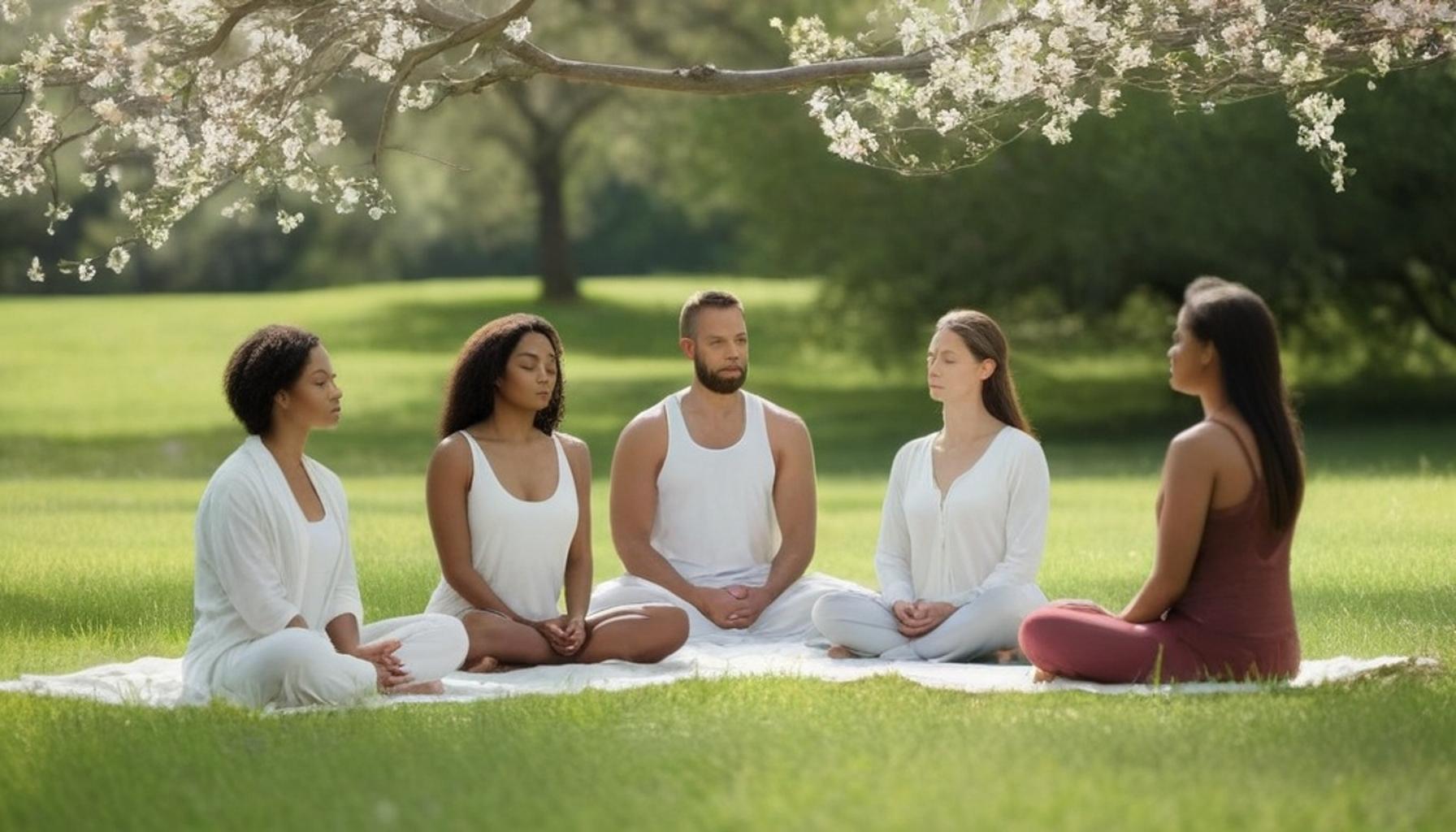
The importance of daily meditation for mental health and emotional balance

Why Millions of Americans Are Turning to Stillness Every Morning
Across the United States, from busy New York apartments to quiet Midwest homes, a quiet revolution is taking place. People are waking up ten minutes earlier not to check emails, but to sit in silence. This shift reflects a growing recognition of daily meditation for mental health as a practical, science-backed tool.
According to the National Center for Complementary and Integrative Health, meditation practice among U.S. adults has more than tripled over the past decade. This isn’t a passing wellness trend—it’s a response to rising stress, anxiety, and burnout rates nationwide. Corporate wellness programs, school districts in California, and even NFL locker rooms have started integrating mindfulness sessions into daily routines, signaling just how mainstream this practice has become.
What Makes This Practice So Powerful?
The benefits of meditation for emotional balance extend far beyond a temporary sense of calm. Research links consistent practice to measurable changes in brain structure and function.
- Reduced activity in the amygdala, the brain’s stress-response center
- Increased gray matter density linked to emotional regulation
- Lower cortisol levels after just eight weeks of practice
- Improved focus and decision-making under pressure
These aren’t vague promises—they’re findings from peer-reviewed studies conducted at institutions like Harvard and Johns Hopkins. Understanding how meditation improves mental health requires looking at both the immediate and long-term effects on the nervous system. Some studies even suggest that regular practitioners show slower rates of age-related cognitive decline, a finding that has caught the attention of neurologists studying long-term brain health.
Veterans’ hospitals across the country have also begun incorporating mindfulness-based stress reduction programs to help treat symptoms of post-traumatic stress disorder, with promising early results. This growing body of evidence has pushed insurance providers, including several major U.S. health plans, to consider covering guided meditation programs as part of preventive mental health care.
A Practice Anyone Can Start Today
You don’t need a silent retreat or years of training to begin. Simple meditation techniques for mental health can be learned in minutes and practiced anywhere—whether you’re sitting in a parked car before work in Chicago or on a porch in rural Georgia.
Apps like Headspace and Calm have made guided sessions accessible to millions, while community centers and local YMCAs increasingly offer free beginner classes. Even five minutes of focused breathing, practiced consistently, can produce noticeable shifts in mood and stress tolerance.
This article explores the real daily meditation practice benefits, backed by data, and offers practical strategies for building a routine that sticks. Whether you’re skeptical or curious, the evidence suggests it’s worth a closer look—and perhaps, a few quiet minutes tomorrow morning.
DISCOVER MORE: Click here to learn about the long-term health benefits of plant-based diets
Before dismissing this as another wellness fad, consider what neuroscientists have actually documented. Daily meditation for mental health isn’t just a feel-good phrase circulating on social media—it’s a measurable biological process that researchers have tracked using MRI scans and cortisol tests. What was once dismissed as a spiritual practice reserved for monasteries has now entered clinical laboratories across the country, from Boston to San Francisco, where scientists are quantifying its effects with the same rigor applied to pharmaceutical trials.
A landmark Harvard study led by neuroscientist Sara Lazar found that participants who meditated for just eight weeks showed physical changes in brain regions associated with memory, empathy, and stress. This wasn’t a temporary shift in mood—it was structural transformation visible on a scan. Gray matter density increased in the hippocampus, while the amygdala, often called the brain’s alarm system, actually shrank in size. Researchers were so surprised by these findings that the study has since been replicated in multiple follow-up trials, further cementing meditation’s legitimacy in mainstream neuroscience.
How Stress Actually Leaves the Body
Understanding how meditation improves mental health starts with the body’s stress response system. When you’re anxious, your amygdala fires up, flooding your bloodstream with cortisol. Over time, this chronic activation contributes to anxiety disorders, high blood pressure, and even weakened immune function. This is the same fight-or-flight mechanism that once helped humans escape predators, but in modern life, it gets triggered by traffic jams, overflowing inboxes, and late-night doom-scrolling instead.
Meditation interrupts this cycle. Here’s what researchers have observed happening physiologically during consistent practice:
- Heart rate variability improves, indicating better stress resilience
- Blood pressure drops measurably within weeks of daily sessions
- Sleep quality increases due to lower nighttime cortisol levels
- The prefrontal cortex, responsible for rational decision-making, becomes more active during moments of stress
These shifts explain why mindfulness meditation for emotional stability has become a recommended tool among therapists treating generalized anxiety disorder, particularly in outpatient clinics across states like Colorado and Oregon, where integrative medicine has gained significant traction. In fact, several major hospital systems, including those affiliated with Kaiser Permanente, now offer mindfulness-based stress reduction programs as part of standard behavioral health referrals.
Not All Meditation Looks the Same
One common misconception is that meditation requires cross-legged silence for an hour. In reality, effective meditation techniques for mental health vary widely, and finding the right style often determines whether someone sticks with the habit. Some people thrive with structured apps and guided audio, while others prefer unguided silence in nature.
Some popular approaches include:
- Body scan meditation, which draws attention to physical sensations to release tension
- Loving-kindness meditation, shown to reduce symptoms of depression in clinical trials
- Breath-focused meditation, ideal for beginners and often taught in five-minute sessions
- Walking meditation, popular among people who struggle to sit still
A 2021 study published in JAMA Psychiatry found that mindfulness-based interventions were as effective as escitalopram, a common anxiety medication, for treating anxiety disorders in adults. That comparison alone has prompted many primary care physicians in the U.S. to start mentioning meditation during routine checkups, not as a replacement for treatment, but as a legitimate complement to it. As more insurance providers begin covering mindfulness programs, the line between alternative wellness and evidence-based medicine continues to blur.

Key Aspects of Daily Meditation for Mental Health
Understanding daily meditation for mental health requires breaking down its core components. The table below highlights essential techniques and their corresponding benefits, offering a quick reference for anyone curious about how meditation improves mental health and emotional resilience.
| Meditation Technique | Mental Health Benefit |
|---|---|
| Mindfulness Meditation | Mindfulness meditation for emotional stability, reducing anxiety by up to 30% |
| Breath-Focused Practice | Lowers cortisol levels, easing stress responses within minutes |
| Body Scan Meditation | Enhances self-awareness, part of key meditation techniques for mental health |
| Consistent Practice | Delivers long-term benefits of meditation for emotional balance and clarity |
These daily meditation practice benefits reveal only part of the story. Each technique offers a unique pathway toward emotional equilibrium, inviting readers to explore which method aligns best with their personal wellness goals.
DIVE DEEPER: Click here to learn more
The Workplace Is Paying Attention Too
Corporate America has taken notice of what clinicians already knew. Companies like Google, Apple, and General Mills have built meditation rooms into their offices, and it’s not just a perk for optics. Internal data from these programs suggests that daily meditation practice benefits extend directly into productivity metrics, absenteeism rates, and employee retention.
Aetna, the health insurance giant, ran an internal study years ago that found employees who participated in mindfulness programs gained an average of 62 minutes of productivity per week and reported a 28 percent reduction in stress levels. That’s not a marginal improvement—it’s the kind of number that gets discussed in boardrooms, not just wellness newsletters.
What Happens When You Skip a Day
Consistency matters more than intensity, according to most researchers studying this field. A single 45-minute meditation session might feel great, but it doesn’t rewire anything long-term. The real transformation associated with daily meditation for mental health comes from repetition, similar to how physical exercise requires ongoing effort rather than one intense workout.
People who meditate five to ten minutes daily often report better emotional regulation than those who meditate for an hour once a week. This finding challenges the assumption that longer sessions automatically produce better outcomes. Instead, frequency appears to matter more than duration when building resilience against anxiety and mood swings.
- Missing a few days occasionally won’t erase progress, but prolonged gaps often lead to a return of baseline stress patterns
- Short, consistent sessions build neural pathways more effectively than sporadic long sessions
- Many long-term practitioners describe the habit as similar to brushing teeth—something done regardless of mood or motivation
Emotional Balance Isn’t the Same as Feeling Happy
There’s a common misunderstanding that meditation should make people feel blissful or calm every single time they practice. In reality, the benefits of meditation for emotional balance often show up as something quieter: the ability to notice a difficult emotion without immediately reacting to it.
Therapists sometimes describe this as creating space between stimulus and response. Someone stuck in traffic on the 405 in Los Angeles might still feel irritated, but instead of spiraling into road rage, they notice the irritation, breathe through it, and let it pass. That pause is the actual skill being trained.
Dr. Judson Brewer, a psychiatrist and addiction specialist at Brown University, has researched this phenomenon extensively, particularly regarding habitual reactions to stress and cravings. His work suggests that mindfulness doesn’t eliminate difficult emotions—it changes a person’s relationship to them, reducing the compulsive need to escape discomfort through distraction, overeating, or substance use.
This distinction matters for anyone expecting meditation to function like a light switch for happiness. It’s less about achieving constant positivity and more about developing a steadier internal baseline, one that doesn’t get hijacked by every minor inconvenience or unexpected setback.
The Bigger Picture: Why This Practice Deserves a Permanent Spot in Daily Life
From corporate boardrooms in Silicon Valley to therapy offices across the country, the evidence keeps pointing in the same direction. Daily meditation for mental health isn’t a passing wellness trend—it’s a measurable intervention with documented effects on stress hormones, emotional reactivity, and workplace performance.
What makes this practice worth adopting isn’t the promise of constant serenity. It’s the slow, cumulative rewiring that happens when someone commits to a few quiet minutes each day, rain or shine, mood or no mood.
The research covered here reveals several truths that deserve repeating. Consistency outperforms intensity. Five minutes daily can outperform an hour once a week. And the benefits of meditation for emotional balance often look less like happiness and more like composure under pressure.
Understanding how meditation improves mental health also means letting go of unrealistic expectations. Progress isn’t linear, and skipped days don’t erase months of practice. What matters is returning to the cushion, or the office chair, or the car seat, and starting again.
- Explore different meditation techniques for mental health, from breath awareness to body scans, to find what actually sticks
- Track small shifts in reaction time to stress rather than expecting dramatic transformation overnight
- Treat the practice as maintenance, not a cure, similar to diet or exercise
Perhaps the most compelling argument for mindfulness meditation for emotional stability is its accessibility. No equipment, no membership, no prescription. Just a willingness to sit still and pay attention, even when everything in modern life pulls in the opposite direction.
Anyone curious enough to have read this far already has the only ingredient that matters: interest. What happens next is simply a matter of showing up tomorrow, and the day after that.
Frequently Asked Questions
How long should I meditate daily to see mental health benefits?
Research suggests that even 10 to 15 minutes of daily meditation can reduce symptoms of anxiety and stress within a few weeks. Consistency matters more than duration, so starting with short sessions and gradually increasing time tends to yield better long-term results. Many people notice improved emotional regulation after practicing daily for about four to eight weeks.
Can daily meditation help with anxiety and depression?
Yes, studies show that daily meditation for mental health can lower cortisol levels and reduce activity in the brain’s fear center, the amygdala, which helps ease anxiety. Mindfulness-based practices are also used clinically to prevent depressive relapse by helping people observe negative thoughts without becoming overwhelmed by them. However, meditation works best as a complement to professional treatment, not a replacement for therapy or medication when needed.
What’s the best time of day to meditate for emotional balance?
Morning meditation is popular because it sets a calm tone for the day and reduces reactivity to stressors before they arise. That said, evening sessions can help process the day’s emotions and improve sleep quality, which is closely tied to emotional stability. The best time is ultimately whenever you can meditate consistently, since regularity has a greater impact than the specific hour chosen.
Do I need special training to start a daily meditation practice?
No formal training is required to begin meditating for mental health benefits; free apps like Headspace, Calm, or Insight Timer offer guided sessions for beginners. Simple techniques like focused breathing or body scans can be learned in minutes and practiced anywhere. Over time, many people choose to deepen their practice through classes or retreats, but this isn’t necessary to experience initial improvements in emotional balance.
How does daily meditation physically change the brain to improve mental health?
Neuroimaging studies show that consistent meditation increases gray matter density in areas linked to emotional regulation, such as the prefrontal cortex, while shrinking the amygdala, which governs fear and stress responses. This is often referred to as neuroplasticity, the brain’s ability to reorganize itself based on repeated experiences. These changes typically become measurable after eight weeks of regular practice, supporting long-term improvements in mood stability.

Linda Carter
Linda Carter is a writer specializing in healthy habits and balanced living. With extensive experience helping readers build sustainable routines, she shares practical guidance on nutrition, physical activity, quality sleep, stress management, and emotional well-being. Her goal is to offer simple, accessible strategies that inspire people to care for their health and enjoy a more balanced life.